Understanding Sleep Paralysis: The Science Behind Nocturnal Immobility
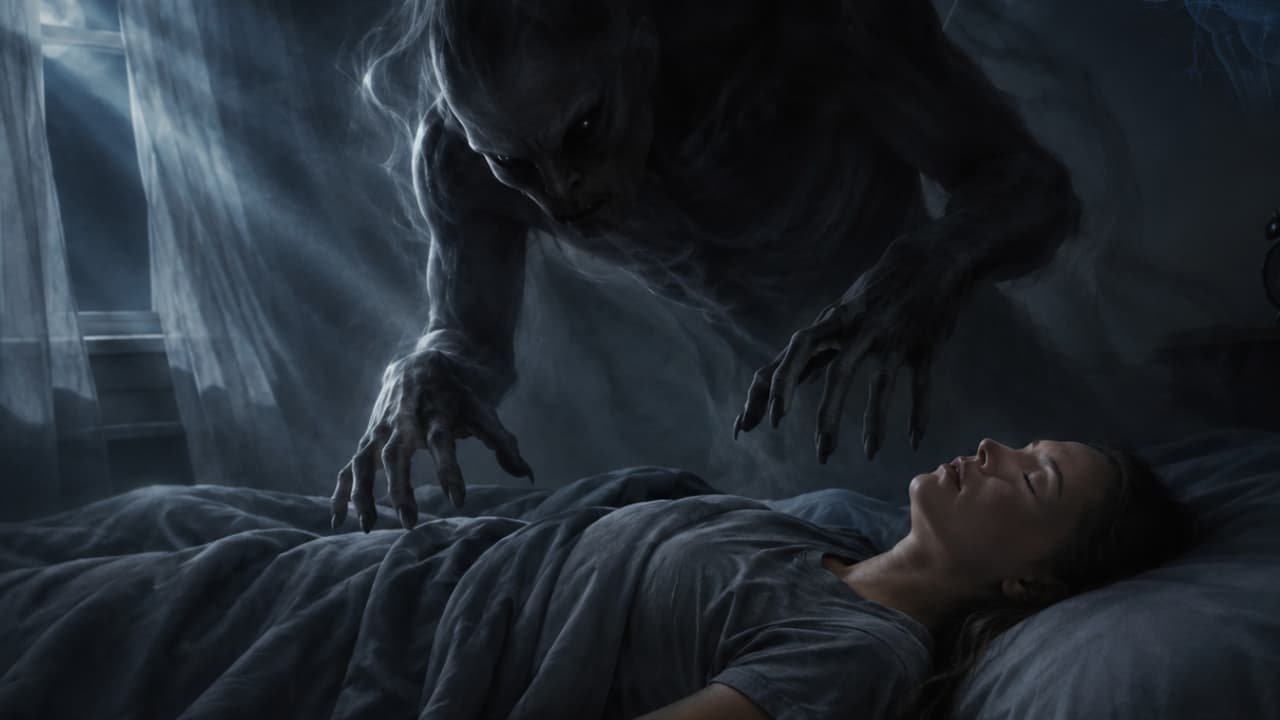
At 3:17 a.m., a college student in Toronto wakes up convinced someone is standing in the corner of her room. She tries to sit up. Nothing moves. Her chest feels pinned, her voice gone. Seconds stretch into something much longer—until, abruptly, she can move again. The room is empty.
Experiences like this are so vivid that people often describe them as supernatural. They’re not. They are, however, one of the strangest glitches in human biology.
The Body That Won’t Wake
Sleep paralysis sits at the intersection of two states that are supposed to remain separate: dreaming and waking. During rapid eye movement (REM) sleep, the brain is highly active, but the body is effectively shut down. This paralysis—known as REM atonia—is controlled by structures in the brainstem, particularly the pons and medulla, which inhibit motor neurons to prevent us from acting out dreams.
When everything works, you dream safely and wake up with movement restored. But sometimes the timing slips.
“You have elements of REM sleep intruding into wakefulness,” explains J. Allan Cheyne, a psychologist at the University of Waterloo who has studied the phenomenon for decades. The result is a person who is conscious but temporarily unable to move or speak.
That mismatch is the core of sleep paralysis. And it’s surprisingly common.
A 2011 meta-analysis by Brian Sharpless and Jacques Barber, published in Sleep Medicine Reviews, estimated that about 7.6% of the general population experiences at least one episode in their lifetime. Among students and psychiatric patients, the rates are significantly higher—up to 28% and 31.9%, respectively.
REM Atonia: A Protective Mechanism Gone Awry
REM atonia isn’t a flaw. It’s a safety feature.
Studies using polysomnography—sleep recordings that track brain waves, muscle activity, and eye movements—show that during REM sleep, inhibitory neurotransmitters like glycine and GABA suppress spinal motor neurons. This keeps your body still while your brain simulates movement.
In sleep paralysis, that inhibition lingers after consciousness returns. The brain has flipped “on,” but the body hasn’t gotten the memo.
Narcolepsy offers a more extreme example. Patients with narcolepsy frequently experience sleep paralysis because their REM cycles are unstable. Research from Emmanuel Mignot at Stanford University has shown that disruptions in hypocretin (orexin), a neurotransmitter regulating wakefulness, play a key role in this instability.
Why the Chest Feels Heavy
Many people report a crushing sensation on their chest. It’s not imaginary—but it’s not what it feels like either.
During REM sleep, breathing becomes shallow and irregular, relying more on the diaphragm than on accessory muscles. When someone wakes during this state, the mismatch between expected and actual breathing patterns can feel like suffocation.
Add panic, and the sensation intensifies.
The Hallucination Problem
Sleep paralysis rarely comes alone. It often brings company—unwelcome, vivid, and sometimes terrifying.
Researchers typically divide these hallucinations into three categories:
The Intruder
A sense that someone is present in the room. Not seen clearly, but felt with certainty.
Cheyne’s research describes this as hyperactivation of the brain’s threat-detection system, particularly the amygdala. The brain, half-dreaming, tries to make sense of immobility and generates a narrative: something is holding you down.
The Incubus
This is where the chest pressure meets a perceived entity. Across cultures, this has produced remarkably similar myths: demons sitting on sleepers in medieval Europe, the “kanashibari” spirit in Japan, and the “Old Hag” in Newfoundland folklore.
A 2015 paper by Baland Jalal at Harvard University examined these cross-cultural patterns and argued that the hallucinations are shaped by cultural expectations layered onto a shared neurological experience.
Vestibular-Motor Sensations
Less frightening, but no less strange. People report floating, flying, or leaving their bodies.
These experiences are linked to disruptions in the temporoparietal junction, a brain region involved in body awareness. Olaf Blanke, a neuroscientist at EPFL in Switzerland, has shown that electrical stimulation of this area can induce out-of-body experiences—suggesting a biological basis for these sensations during sleep paralysis.
Who Gets It—and Why
Sleep paralysis isn’t evenly distributed.
Students, shift workers, and people with irregular sleep schedules report higher rates. So do individuals with anxiety disorders, PTSD, and panic disorder. A 2018 study in Behaviour Research and Therapy found a strong association between sleep paralysis frequency and anxiety sensitivity—the tendency to interpret bodily sensations as dangerous.
Sleep Position Matters
There’s a small but consistent finding: episodes are more likely when lying on the back.
The mechanism isn’t fully settled. Some researchers suggest that supine position may exacerbate breathing irregularities or airway resistance, which in turn influences REM stability. The data here is thinner than in other areas, but the correlation shows up often enough to be taken seriously.
Genetics and Family Patterns
There’s some evidence of heritability. Twin studies, including work by Denis and French (2016), suggest a modest genetic component, though environmental factors—especially sleep habits—play a larger role.
In other words, you might inherit a tendency, but your lifestyle often decides whether it shows up.
Not Dangerous, But Not Trivial
Sleep paralysis won’t physically harm you. That’s the reassuring part.
The less reassuring part is how convincing it feels. For some, a single episode is enough to leave a lasting impression. For others, especially those with recurrent episodes, it can lead to significant sleep anxiety—ironically increasing the likelihood of future occurrences.
There’s also a long history of misinterpretation. Before modern neuroscience, these experiences fed into beliefs about witchcraft, alien abduction, and nocturnal demons. Even today, some people interpret them through supernatural frameworks.
That doesn’t make the experience any less real. It just means the explanation has changed.
Managing and Preventing Episodes
The most effective interventions are, frankly, not very dramatic.
Oregano Health Benefits: Why This Humble Kitchen Herb Deserves a Spot in Your Wellness Routine
Stabilizing Sleep
Consistent sleep schedules reduce the likelihood of REM disruption. The American Academy of Sleep Medicine emphasizes regularity—going to bed and waking up at the same time—as a cornerstone of sleep health.
Sleep deprivation is a major trigger. So is fragmentation—waking up repeatedly during the night.
Reducing Stress and Anxiety
Since anxiety is strongly linked to episodes, managing stress can make a difference. Cognitive behavioral therapy (CBT), particularly CBT for insomnia (CBT-I), has shown benefits.
Baland Jalal has also proposed a specific intervention: meditation-relaxation therapy during episodes. Instead of struggling, the person focuses on slow breathing and attempts to reframe the experience as temporary and harmless. Early studies suggest it may reduce both frequency and intensity.
What to Do in the Moment
Trying to force full-body movement often fails. Smaller actions—wiggling fingers or toes, controlling breathing—can sometimes break the paralysis.
And then it ends. Always.
A Glitch, Not a Mystery
There’s a temptation to treat sleep paralysis as something exotic, even mystical. The imagery invites that. But the underlying mechanism is well understood, at least in broad strokes.
It’s a timing error. A boundary crossed too soon.
And yet, even with all the neuroscience, the experience retains a certain power. Being awake and unable to move taps into something primal—loss of control, vulnerability, the sense that something is wrong in a way that’s hard to articulate.
I’ve read dozens of clinical descriptions of sleep paralysis, and they’re all precise, careful, and a little detached. Then you read a firsthand account, and the tone shifts completely. Science explains it. It doesn’t quite domesticate it.
That tension is probably here to stay.